
Beverage Distributorship vs Franchise – Which is Better?
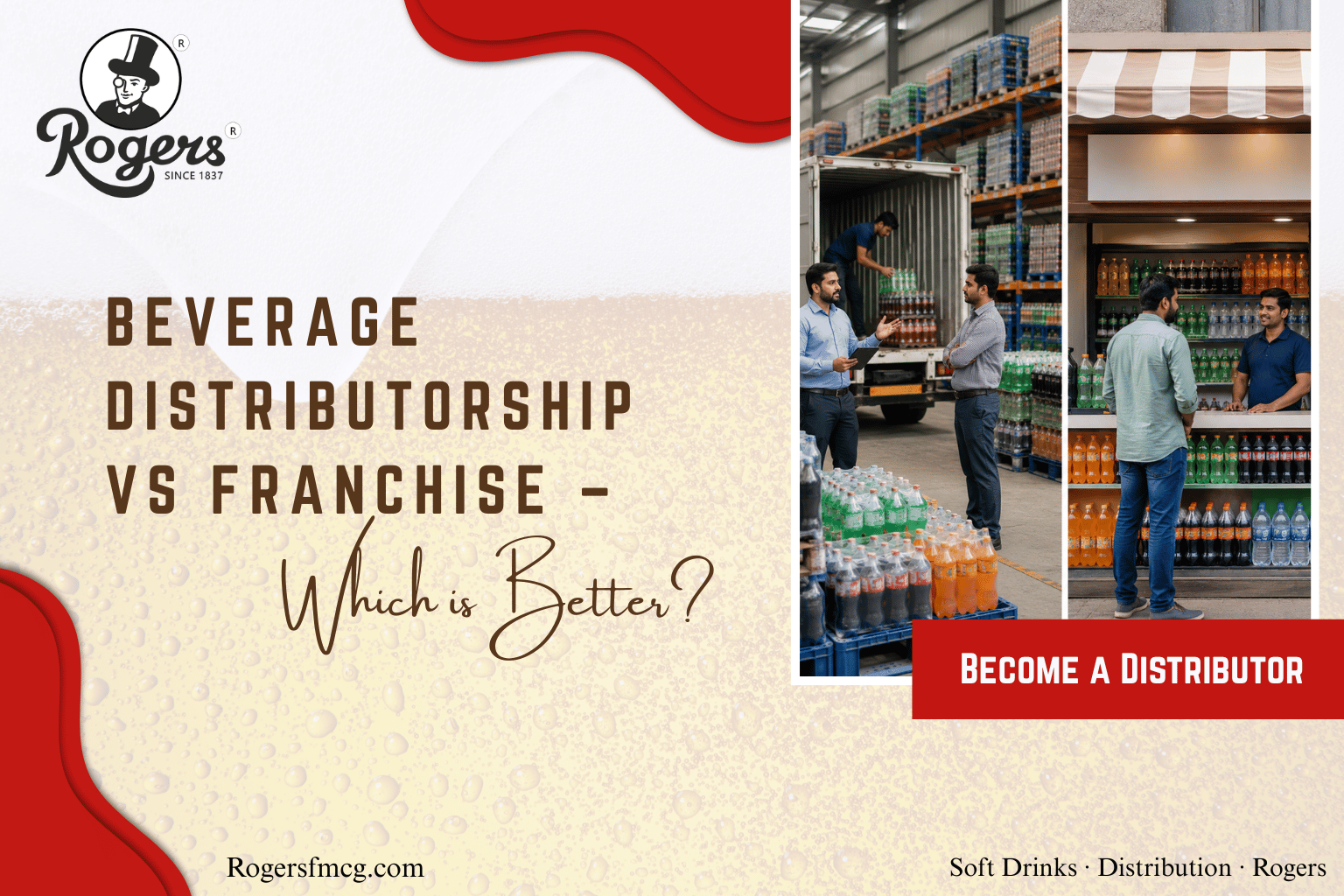
India’s beverage industry is growing rapidly, creating exciting opportunities for entrepreneurs. From soft drinks and soda to juices and energy drinks, the demand for beverages continues to rise across metro cities as well as Tier-2 and Tier-3 regions.
According to industry reports, India’s non-alcoholic beverage market is expected to grow at a CAGR of more than 10% in the coming years. This growth has encouraged many people to explore business opportunities like wholesale beverage distributors and beverage franchises.
But the big question is — which business model is better?
At Rogers, we often see entrepreneurs confused between distributorship and franchise models. Both have advantages, but the right choice depends on your investment, goals, and business style.
Let’s thoroughly understand both.
Understanding the Beverage Industry in India
India’s beverage market is expanding due to:
- Rising disposable income
- Growing urbanisation
- Increasing demand for ready-to-drink beverages
- Higher consumption during summer seasons
Soft drinks, soda, flavoured beverages, packaged water, and energy drinks are all seeing strong growth.
For businesses, this means one thing: huge opportunity.
What is a Beverage Distributorship?
A beverage distributorship is a business where you supply beverages in bulk to retailers, supermarkets, restaurants, cafés, and local shops.
As a distributor, you work between the manufacturer and retailers.
Common Types of Beverage Distributorship:
- Soft drink distributorship
- Soda distributorship
- Mineral water distribution
- Juice and energy drink supply
Responsibilities:
- Managing inventory
- Delivering products
- Building retailer relationships
- Handling bulk orders
Many wholesale beverage distributors in India earn profits through high-volume sales.
What is a Beverage Franchise?
A beverage franchise allows you to run a business using an established brand name.
You pay franchise fees and follow the company’s setup and operational guidelines.
Popular Beverage Franchise Types:
- Juice shops
- Tea cafés
- Coffee outlets
- Beverage kiosks
Franchise Support Usually Includes:
- Branding
- Marketing
- Staff training
- Product supply
Franchises are more customer-facing businesses compared to distributorships.
Beverage Distributorship vs Franchise – Basic Difference
| Feature | Distributorship | Franchise |
|---|---|---|
| Business Type | B2B | Retail |
| Investment | Medium | Medium to High |
| Brand Control | Flexible | Limited |
| Revenue Model | Bulk supply | Direct sales |
| Territory Rights | Usually available | Depends on the brand |
Investment Comparison
Beverage Distributorship Investment
Typical investment includes:
- Warehouse setup
- Delivery vehicle
- Staff salaries
- Working capital
Estimated investment: ₹5 lakh to ₹20 lakh depending on scale.
Beverage Franchise Investment
Franchise costs include:
- Franchise fees
- Interior setup
- Branding expenses
- Royalty charges
Estimated investment: ₹10 lakh to ₹50 lakh or more.
Which Requires Lower Investment?
Generally, distributorships can be started with a lower investment compared to premium franchises.
Profit Margin Comparison
Beverage Distributor Profit Margins
Most wholesale beverage distributors earn:
- 5–15% margins on bulk supply
- Additional incentives from brands
High sales volume often increases profitability.
Beverage Franchise Profit Margins
Franchise businesses may offer:
- Higher retail pricing
- Better customer margins
But profits are reduced due to:
- Royalty fees
- Operational expenses
In the long run, both can be profitable if managed properly.
Business Control & Flexibility
Flexibility in Distributorship
As a distributor, you get:
- Freedom to work with multiple brands
- Pricing flexibility
- Independent business decisions
Flexibility in Franchise
Franchise owners must follow:
- Brand rules
- Menu standards
- Marketing guidelines
If you prefer independence, distributorship offers more flexibility.
Brand Support & Marketing
Franchise Support
One major advantage of franchises is strong branding support. Most franchises provide:
- National advertising
- Social media promotions
- Training support
Distributorship Support
Distributors usually receive:
- Product promotions
- Dealer schemes
- Limited marketing support
Franchise businesses benefit more from brand recognition.
Risk Factors in Both Models
Risks in Beverage Distributorship
- Stock management issues
- Seasonal demand fluctuations
- Transport and fuel costs
Risks in Beverage Franchise
- High operational expenses
- Dependency on brand reputation
- Fixed royalty payments
Summer sales can increase beverage demand in India by 30–40%, but off-season sales may slow down.
Scalability & Growth Opportunities
Growth in Distributorship
Distributors can:
- Expand to new territories
- Add multiple beverage brands
- Increase warehouse capacity
Growth in Franchise
Franchise businesses can:
- Open multiple outlets
- Expand into nearby cities
Distributorships usually scale faster in B2B markets.
Which Business Model is Better for Beginners?
If you are new to business:
Choose Distributorship If:
- You have retailer contacts
- You prefer logistics and operations
- You want lower operational complexity
Choose Franchise If:
- You prefer customer interaction
- You want a ready-made business model
- You can invest more capital
Which Business is Better in Small Cities & Rural India?
In Tier-2 and Tier-3 cities:
- Beverage demand is growing rapidly
- Local distribution networks perform well
- Regional brands are highly popular
This makes wholesale beverage distributors highly successful in smaller cities.
Popular Beverage Business Opportunities in India
Distributorship Opportunities:
- Soft drinks
- Packaged water
- Soda brands
- Energy drinks
Franchise Opportunities:
- Juice bars
- Tea cafés
- Cold beverage kiosks
Legal & Licensing Requirements
For Beverage Distributorship:
- GST registration
- FSSAI licence
- Trade licence
For Beverage Franchise:
- Franchise agreement
- FSSAI compliance
- Local business approvals
Technology & Digital Opportunities
Today, beverage businesses use:
- Online ordering systems
- Inventory management apps
- B2B supply apps like Udaan
Digital systems improve efficiency and customer management.
Expert Tips Before Choosing
Before Taking Distributorship:
- Check market demand
- Understand profit margins
- Verify territory rights
Before Buying a Franchise:
- Read agreements carefully
- Understand royalty terms
- Analyse operational costs
Rogers recommends doing proper local market research before investing.
FAQs
What is the difference between distributorship and franchise?
A distributorship focuses on bulk supply to retailers, while a franchise directly sells products to customers using a brand name.
Which is more profitable: a beverage distributorship or a franchise?
Both can be profitable. Distributorships work on high-volume sales, while franchises earn through retail pricing.
How much investment is needed for a beverage distributorship in India?
Investment usually starts from ₹5 lakh, depending on inventory and location.
Is the beverage franchise business profitable in India?
Yes, especially in high-footfall urban areas.
Which business has lower risk?
Distributorship generally has lower operational risk compared to franchises.
Can I start a beverage distributorship from home?
Small-scale distribution can begin from home with limited storage space.
Conclusion
Both distributorship and franchise models offer strong opportunities in India’s fast-growing beverage industry.
If you prefer operational flexibility and B2B business, becoming a wholesale beverage distributor may be the better option. If you want brand recognition and a customer-facing business, a franchise could suit you more.
At Rogers, we believe the best business model depends on your investment capacity, local market understanding, and long-term goals.