
Ingredients Used in Soft Drink Manufacturing Explained
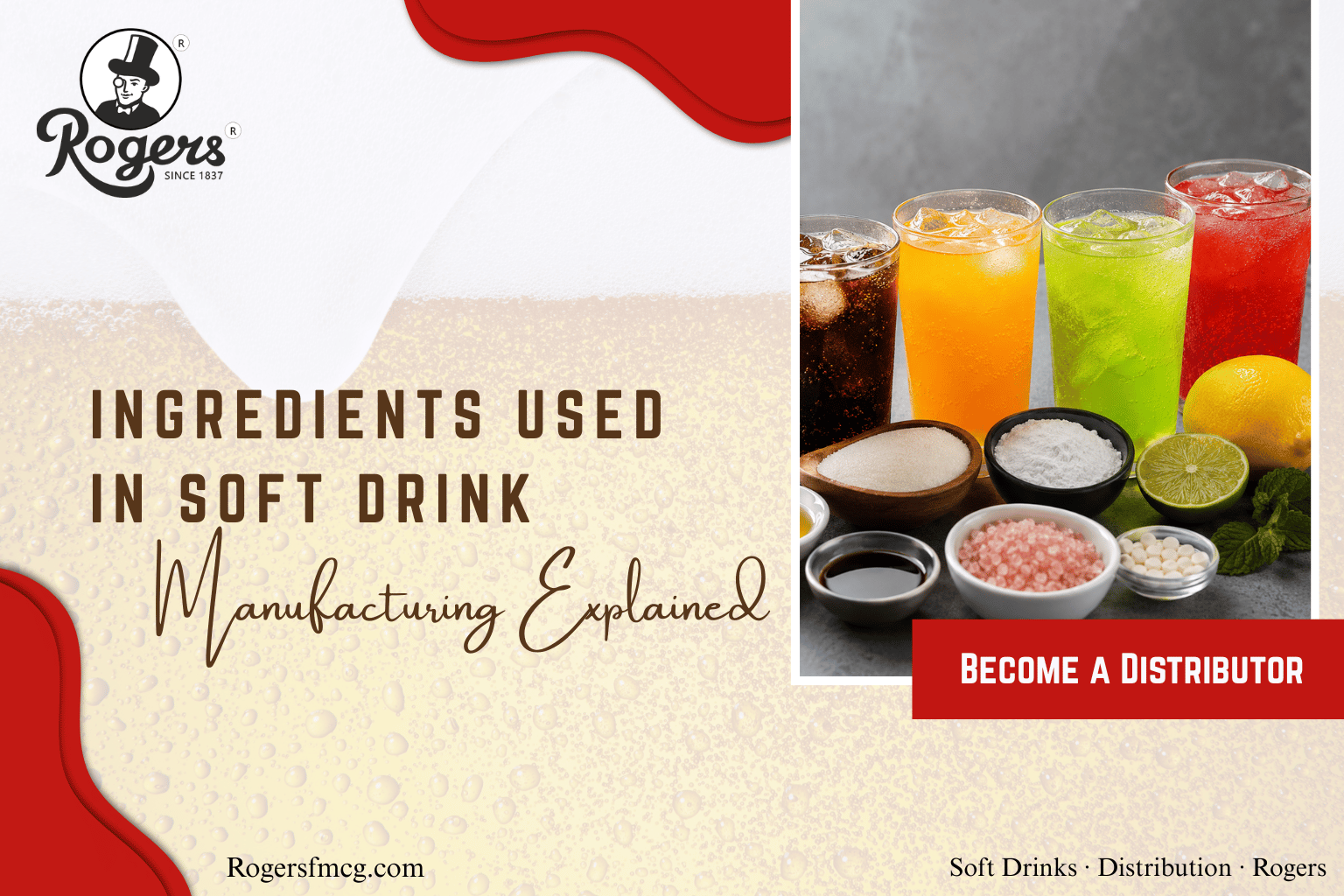
Millions of individuals consume soft drinks on a daily basis. Whether it is cola, lemon soda, orange juice, carbonated drinks, or energy drinks, each and every single product is produced by using a specific combination of ingredients. Each of the ingredients serves a particular purpose in terms of taste, texture, flavor, appearance, and longevity of the product.
Selecting the appropriate ingredients for any current soda manufacturing company is important because all consumers require consistency in taste, which only happens when the correct formulation process is used to achieve it.
In this blog, we will explain the main ingredients used in soft drink manufacturing and how they contribute to the final product.
1. Water – The Base of Every Soft Drink
Water is the key element in soft drinks since it forms the major portion of the drink. Many drinks are made from over 85 per cent water.
Manufacturers use purified and treated water to make sure that it is safe and has a consistent taste. Before the production process starts, there is always purification of water through a number of processes to remove bacteria, odor and minerals.
Clean water ensures the following:
- Quality of the product is maintained
- Uniformity of taste
- It is safe for consumption
- Effectiveness of carbonation
2. Carbon Dioxide – Creating the Fizz
The bubbles found in soft drinks are formed by carbon dioxide gas, referred to as CO₂.
This gas is introduced into the drink while in the factory through pressurization. After opening the bottle, the pressure is released and the bubbles are formed.
The process of carbonation has more advantages other than creating bubbles. These include:
- Giving a refreshing sensation
- Sharpening flavor
- Improving mouthfeel
- Ensuring freshness
If the carbonation is too low, your drink will feel dull and flat; if it is too high, the drink may be too aggressive. The perfect balance is an important skill for every carbonated drink manufacturer.
3. Sugar and Sweeteners — Creating the Right Sweetness
One of the important features of soft drinks is their sweet taste.
Traditional sodas use sugar to obtain a full and enjoyable taste. The sweetness in the drink neutralizes its acidity and makes the carbonation more comfortable. Soft drinks without any sweetness will be too sour for consumers.
Nowadays, there are many producers who manufacture sugarless versions of popular beverages.
Common sweeteners include:
- Sugar
- Stevia
- Sucralose
- Acesulfame-K
It should be noted that the level of sweetness is tightly regulated by a reputable soda manufacturer.
4. Flavours — The Heart of the Drink
It is the flavour that makes all beverages different and unique from each other. The flavouring of a beverage adds its identity and gives it the taste consumers recognise.
Soft drink manufacturers use a wide variety of flavouring ingredients such as:
- Fruit-based flavours
- Herb blends
- Spice blends
- Citrus flavours
- Nature-identical as well as natural flavours
Common flavours used are lemon, ginger, raspberry, orange, mojito, and jeera masala.
Creating the flavour is a process that needs a lot of trials and experiments to make sure the resulting combination of ingredients will be enjoyable.
5. Acids – Balancing the Taste
Acids are included in soft drinks to add a tangy taste sensation.
If there were no acids in soft drinks, the products would be excessively sweet.
The most common acids used in soft drink manufacturing are:
- Citric acid
- Phosphoric acid
- Malic acid
Citric acid is mostly added to fruit-flavoured soft drinks as it gives a fresh flavour of citrus. Phosphoric acid is mostly present in colas.
Acids ensure that:
- Flavor becomes balanced
- Taste becomes sharp
- Product remains stable
- Product becomes fresh
An appropriate amount of acidity gives the product a lively taste.
6. Preservatives – Maintaining Shelf Life
Soft drinks travel a distance to be stored for some time until they reach their consumer. The use of preservatives will help ensure that the drink is fresh when it reaches the customer.
Some of the preservatives used are:
- Sodium benzoate
- Potassium sorbate
Preservatives will prevent any growth of bacteria, fungi, and yeast in the drinks.
The amount of preservatives should be controlled by the authorities. Any decent soda company will follow all the required measures of food production.
7. Colours — Improving Visual Appeal
The color of a drink plays an important role in influencing perceptions about that drink. Consumers associate certain colors with particular tastes.
For example:
- Yellow is associated with lemon drinks
- Orange indicates citrus drinks
- Red indicates berry drinks
- Dark brown represents cola drinks
Food-grade colours are used by manufacturers to make their products look good and provide a better visual appearance.
The food-grade colors may come from:
- Extraction
- Plants
- Caramel coloring
- Synthetic colours that have been approved
Colors do not impact the taste of food, but they do affect consumer experience.
8. Stabilizers — Keeping the Beverage Consistent
There are some soft drinks that have fruit pulps, flavoring oils, or other cloudy components that tend to separate after some time. The stabilizers make sure that there is an even mixture and texture.
Some common types of stabilizers used are:
- Gum Arabic
- Pectin
- Cellulose gum
The purpose of using these stabilizers is to:
- Prevent separation
- Ensure even texture
- Increase stability on shelves
They are mostly useful in fruit-based carbonated beverages and specialty drinks.
Conclusion
Production of soft drinks is a careful process where all the ingredients have their specific purpose. Water forms the foundation of the drink, carbonation makes it bubbly, while sweeteners add the needed balance to the drink.
With regard to acidity, preservatives, colours, and stabilizers, all these components form the drink that people take daily. The next time you open a chilled soda, you will know there is much more inside that bottle than just bubbles and sweetness.
Rogers is a soda manufacturing company which has produced tasty drinks since 1837 by mixing ingredients with expertise. Explore the full range of Rogers drinks — a legacy brand refreshing India for nearly 200 years.
Frequently Asked Questions (FAQs)
What are the basic ingredients used in soft drinks?
Water, sugar, carbon dioxide, flavoring agents, acids, preservatives and colors are used in most soft drinks.
Which acids are commonly used in soda manufacturing?
Citric acid, phosphoric acid, and malic acid are mostly used to improve taste and freshness.
Do all soft drinks contain caffeine?
No, some beverages like fruit sodas and flavoured sparkling drinks are caffeine free.
Why are preservatives added to soft drinks?
Preservatives help to increase shelf life and avoid spoilage caused by bacteria, mold and yeast.
What role do stabilizers play in beverages?
Stabilizers maintain the texture, prevent ingredient separation and improve the overall consistency of the drink.